


7. May 2026
10. July 2023
CESA/SEA Europe and Danish Maritime welcomes historical agreement on IMO MEPC 80
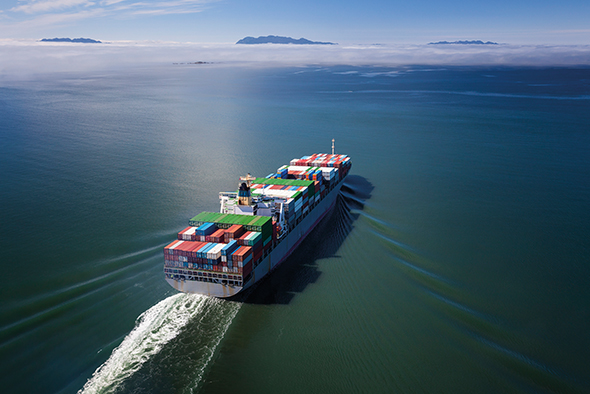
On Friday 7 July 2023, the International Maritime Organization (IMO) reached a landmark decision adopting a revised IMO GHG strategy. The IMO’s Marine Environment Protection Committee (MEPC) agreed on a significant increase of its level of ambition in the ongoing efforts to reduce the impact of international shipping on climate change. The IMO ambition now targets net-zero GHG emissions from international shipping close to 2050, as well as a significant uptake of alternative zero and near-zero GHG fuels by 2030 and indicative checkpoints for 2030 and 2040.
CESA, SEA Europe and Danish Maritime see this decision as a big leap towards decarbonizing the maritime industry and applauds the outcome.
“The decision to jointly intensify and accelerate international legislation sets a promising new course towards sustainable shipping providing momentum to achieve tangible reductions through technical innovation“, says Christophe Tytgat, CESA and SEA Europe Secretary General.
From the perspective of the maritime manufacturing industry, it is encouraging that, besides emission reduction goals, also ambitions for the uptake of zero emission technologies and alternative energies/fuels have been incorporated into the revised strategy. To provide a sound basis for the decision on technological pathways, it is also of utmost importance that the well to wake principle has been agreed as the method for holistic GHG emission assessment.
It must be acknowledged that the revised strategy is a starting point for the complex and tedious development of mandatory MARPOL measures to effectively implement these policy goals. The current decision and the existing instruments alone do not provide sufficient clarity for broad industry action to implement all available energy efficiency options and non-fossil technologies. For the upcoming IMO regulatory development, it is of utmost importance that definitions and requirements provide full technological neutrality.
The full potential of the large variety of solutions, such as alternative fuels, including climate neutral e-fuels, onboard carbon capture and storage (OCCS) and innovative energy converters including wind propulsion, should be successfully combined in newbuilding and retrofitting. In addition, it is crucial for rapid emission reduction to strengthen the instruments to address underperformers and enforce compliance.
“Shipbuilders and marine equipment manufacturers are ready to translate the increased political ambitions into tangible results”, Mr. Tytgat added.
To meet and eventually exceed the technically possible levels of ambition, the agreement will have to be complemented by financial incentives and economic support measures as soon as possible. It is thereby crucial that the “Basket of Measures”, containing both a technical and economic element, will avoid market distortions that could well hamper the timely implementation of a promising strategy. Through CESA, shipbuilders and marine equipment manufacturers will continue to contribute with technical expertise and market knowledge to enable Member States to successfully implement green shipping. Only by cooperative action of Member States and industry, climate protection can be developed from burden into economic opportunities.
With the revised GHG strategy, the IMO reclaims its authority as the platform for state collaboration in climate protection for shipping. Now, the IMO must deliver measures ensuring verifiable maritime GHG emission reductions that are in line with the 1,5° C goal.
Background Note:
SEA Europe represents close to 100% of the European shipbuilding industry in 16 nations, encompassing the production, maintenance, repair, and conversion of all types of ships and floating structures, commercial as well as naval, including the full supply chain with the various producers of maritime systems, equipment material, and services. As an NGO observer at the International Maritime Organisation (IMO), CESA represents the shipbuilding industry and its supply chain from EU Member States, Norway, and Turkey.
For further information please visit www.seaeurope.eu or contact:
Christophe Tytgat, Secretary General
Paul Altena, Director Taxonomy, International Technical and Environmental Affairs


